
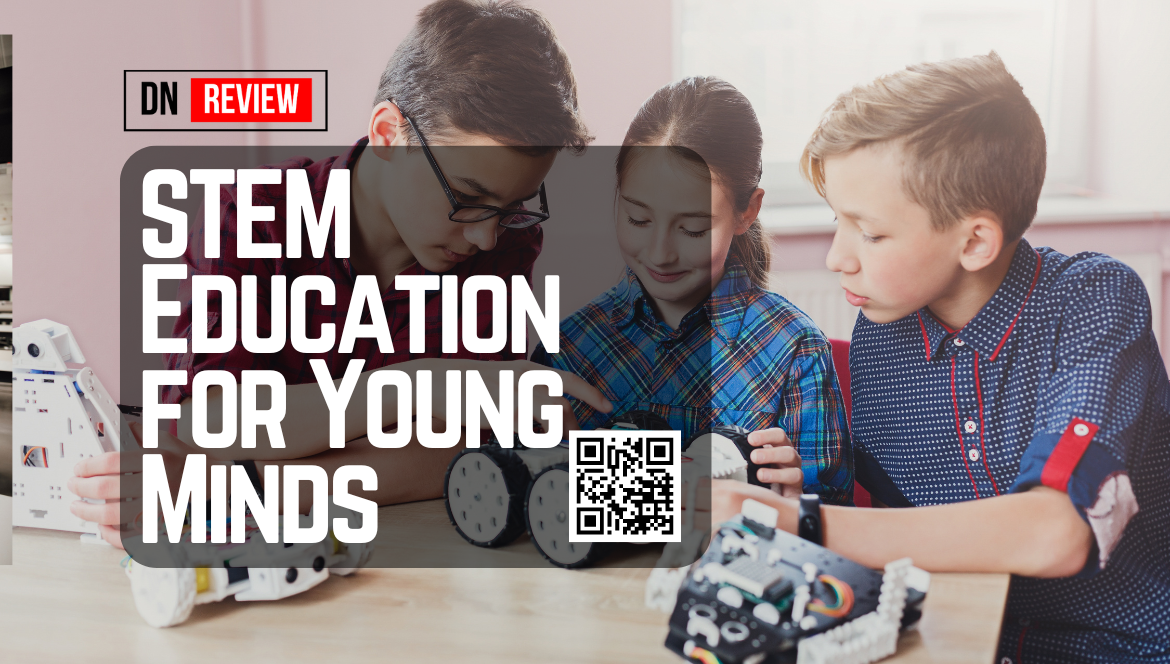
STEM education, focusing on Science, Technology, Engineering, and Mathematics, is essential for fostering critical thinking, creativity, and problem-solving skills in young minds. Introducing children to STEM concepts early on prepares them for future challenges in a rapidly evolving technological world.
Here’s why and how STEM education can be beneficial for young learners:
Importance of STEM Education for Young Minds
Critical Thinking and Problem Solving:
- STEM subjects encourage students to think critically and approach problems methodically. By engaging in experiments and projects, children learn to ask questions, analyze data, and develop solutions.
Creativity and Innovation:
- STEM education promotes creativity by allowing students to design, build, and experiment. This hands-on approach helps them understand the practical applications of their knowledge, fostering a sense of innovation.
Future Career Opportunities:
- As technology continues to advance, many future jobs will require STEM skills. Early exposure to STEM subjects helps children develop an interest in these fields, potentially leading to fulfilling careers in areas such as engineering, computer science, or biotechnology.
Interdisciplinary Learning:
- STEM education integrates multiple subjects, showing students how different fields of knowledge are interconnected. This interdisciplinary approach mirrors real-world scenarios where solutions often require a blend of skills from various domains.
Encouraging Diversity and Inclusion:
- Promoting STEM education among all children, regardless of gender or background, can help bridge the gap in underrepresented groups in STEM fields. Early encouragement can lead to a more diverse and inclusive workforce in the future.
Strategies to Implement STEM Education
Hands-on Learning Activities:
- Encourage children to participate in science experiments, coding exercises, robotics, and engineering challenges. These activities make learning interactive and fun, reinforcing STEM concepts through practical application.
Incorporating Technology in the Classroom:
- Use educational software, apps, and tools that teach coding, mathematics, and science. Virtual labs and simulations can also help students visualize complex concepts and understand them better.
Project-Based Learning:
- Engage students in long-term projects where they can apply their STEM knowledge. For example, building a model bridge or developing a simple video game can teach engineering principles and programming skills.
Encouraging Curiosity and Exploration:
- Foster an environment where asking questions and exploring new ideas is encouraged. Curiosity-driven learning leads to deeper understanding and retention of knowledge.
Collaboration and Teamwork:
- Many STEM activities are best done in groups, promoting collaboration and teamwork. This approach helps students learn from one another and understand the value of different perspectives.
STEM Competitions and Clubs:
- Encourage participation in science fairs, robotics clubs, math competitions, and coding camps. These extracurricular activities can spark a lifelong interest in STEM subjects.
Resources for STEM Education
- Online Platforms: Websites like Khan Academy, Scratch, and Code.org offer free resources for learning STEM subjects at various levels.
- Educational Kits: STEM kits, like those from LEGO Education or LittleBits, provide hands-on tools to explore engineering, electronics, and robotics.
- Community Programs: Many communities offer STEM camps, after-school programs, and workshops that provide additional learning opportunities.
Conclusion
STEM education is crucial for developing the next generation of innovators and problem solvers. By introducing young minds to STEM concepts in engaging and accessible ways, we can equip them with the skills they need to thrive in an increasingly complex world. Whether through classroom activities, technology integration, or extracurricular programs, fostering an early interest in STEM can have a lasting impact on a child’s educational and career trajectory.
DN Review

21 comments
STEM education for young children is very important because it helps develop curiosity, problem-solving, and creative thinking from an early age through play-based learning
STEM education helps young children develop creativity, problem- solving skills, and critical thinking through practical learning. It makes learning more engaging and prepares kids for future technology-based careers.
👩🔬 How does STEM inspire future careers
Why is STEM education important for young childrennnnnnnnnnn
📚 Why is hands-on learning important in STEM education
🤝 How does STEM promote teamwork and collaboration
Why is STEM linked to future job opportunities?
What age group is this STEM program best suited for?
STEM education for young minds sounds really important, but how early is “too early” to start structured STEM learning for children? Should it be more play-based at first?
Which STEM subject do you think has the greatest impact on a child’s future career opportunities, and why?
How early is too early to introduce structured STEM learning should preschool children focus more on play-based exploration or already start guided STEM activities
How can STEM education be designed to keep creativity alive while still building strong analytical skills in young learners 🤔😑😑😑😑🙄🙄
What is the best STEM activity for children under 10 to develop problem-solving skills?
🧠 At what age should children start learning STEM subjects
How can educators balance teaching technical STEM skills with fostering creativity, critical thinking, and innovation in young learners? ????🚀
What are the most effective ways to make STEM subjects engaging and accessible for young learners?
How is technology like AI and robotics changing the way stem is taught in classrooms
Which STEM skills will be most valuable for children in the future job market?
Do hands on STEM activities teach children more effectively than traditional classroom instruction, , m
🔬 What is STEM education, and why is it important for young minds
This is a very useful introduction to STEM education for young learners 👍. It clearly explains how STEM helps children develop creativity, problem-solving skills, and logical thinking through practical learning 🔬🧩. Early exposure to STEM also prepares students for future careers in science and technology 🌍🚀. Overall, it is a great guide for understanding the importance of modern education